


Hiki: Autism ADHD & ND Dating
3.51.12K Reviews
App Specs
- Version
- 4.0.22
- Updated On
- License
- Free
- Downloads
- 100,000+
- Developer
- HIKI, INC.
- Categories
- Social
- Platform
- Android
Screenshots
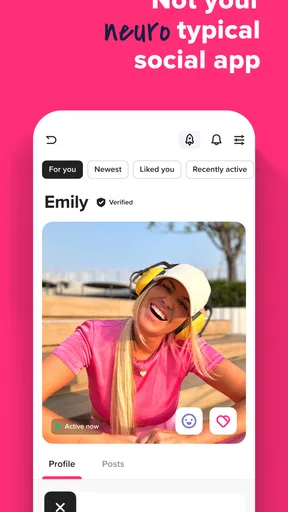
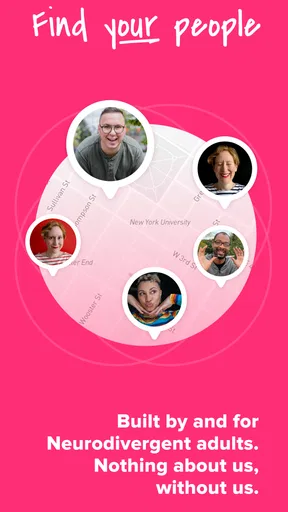
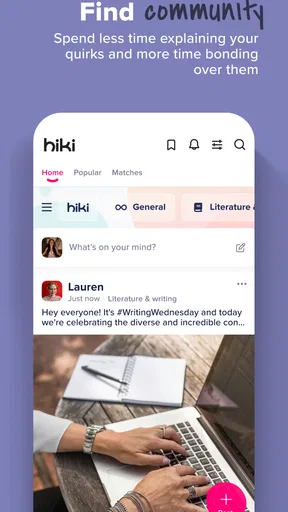
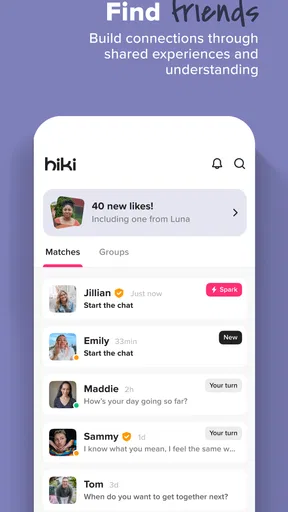

 Analysis by AppCompare
I approached Hiki as a social app for autistic, ADHD, and other neurodivergent adults rather than as another general-purpose dating service. That distinction matters immediately. Its purpose is to help people meet potential partners, friends, or dates around a shared understanding of neurodivergence, and that can make the first conversation feel less like an explanation and more like a connection. My overall impression is positive but measured: it has a clear audience and a thoughtful reason to exist, yet it still requires the same caution, patience, and boundary-setting as any app where strangers meet.
The app is published by HIKI, INC. and is free to install, with optional purchases listed from around fifteen dollars to nearly three hundred dollars per item. It is rated for mature users aged seventeen and above. That age context is important in a household where devices are shared, because this is not something I would casually leave open for a younger family member to explore. The current release is version 4.0.22, and it runs on Android eight or later. On the social-app side, it has passed one hundred thousand installs, with an average rating of three and a half from around four thousand ratings.
How Hiki fits into real household use
A realistic example is a shared tablet in a home where one adult uses it for social apps while another person uses the same device for streaming, shopping, or messaging. In that situation, I would treat Hiki as a personal account, not as a household application. The account should belong to one person, and the person using it should be the one deciding who to contact, what to disclose, and whether a conversation moves beyond the app.
That sounds obvious, but shared devices blur small boundaries. A notification can appear while someone else is holding the tablet. A profile can remain open when a family member picks up the device. A conversation may reveal personal information even when nobody intended to share it. My practical advice is to close the app after use, avoid leaving private chats visible, and keep the device itself protected with the owner’s normal screen lock. Those are simple habits, but they matter more here than they would with a public news app or a casual game.
I also would not use one person’s account as a way for relatives to browse potential matches together. Support from a trusted friend can be useful, especially when someone is new to online dating, but the account holder should remain in control. A helper can discuss general safety, help interpret an uncomfortable message, or suggest questions for a first conversation. They should not impersonate the user, answer messages without permission, or pressure them to meet anyone.
This is one of the app’s strongest qualities and one of its biggest responsibilities: it creates a space where identity and communication style may feel more familiar, but familiarity is not the same as trust. A shared neurodivergent experience can make conversation easier, yet it does not automatically tell me whether another person is respectful, honest, or safe. I found that the best way to use the app is to appreciate the common ground without treating it as a guarantee.
Keeping the account boundary clear
For a personal account, I would begin by deciding what information belongs in a public profile and what should wait until a conversation has earned it. A diagnosis, support need, work detail, neighborhood, phone number, and daily routine are not all equally necessary at the start. The app’s focus may make it tempting to explain everything immediately, but a concise profile is often safer and easier to manage.
Worth Reading Before You Choose

EA SPORTS FC Mobile 26 Is a Bigger Football Game, but It Takes Time

Flipboard Shows What News Apps Must Do Beyond the Feed

Switching to Android Auto Means Rethinking Your Driving Routine

Google Calendar Makes a Crowded Week Easier to Manage

Ludo King Makes the Most of the Minutes Between Plans

Baby Panda World Brings Quick Play to Modern Phones, but Its Game Library Feels Busy
One useful approach is to prepare three layers of information. The first layer is comfortable for a profile: interests, preferred activities, broad relationship goals, and communication preferences. The second layer is suitable for a private conversation after some trust develops. The third layer includes identifying details that I would keep private until there is a strong reason to share them. This is not about hiding who you are. It is about choosing the timing instead of giving a stranger a complete map of your life.
I would also decide in advance how I want to handle unanswered messages, sudden intensity, and requests to move elsewhere. Some people prefer direct communication; others need time to process. Saying that clearly can prevent misunderstandings. For example, “I may take time to reply, but that does not mean I am uninterested” is more useful than hoping a new match will guess what silence means.
That kind of preparation is especially valuable for users who find open-ended social situations tiring. Hiki can reduce one barrier by bringing together people who may already understand ADHD, autism, or other forms of neurodivergence. It cannot remove the need to negotiate expectations. I still had to think about what I wanted, what I could tolerate, and what would make me end a conversation.
Using the app for friendship instead of dating
Although dating is a prominent reason to try it, I think the friendship side deserves equal attention. Someone who is not looking for a relationship may still want to meet people who understand sensory overload, executive-function difficulties, focused interests, direct language, or the need for predictable plans. In that setting, the app can be more approachable than a broad social network where the user has to explain their communication style from the beginning.
A good everyday use case would be an adult who has moved to a new city and wants low-pressure social contact. Rather than promising an instant best friend, I would use the app to look for one manageable conversation around a shared interest. A short exchange about books, games, music, cooking, or a hobby can be a better starting point than a vague “tell me about yourself.” If a conversation feels comfortable, the next step could be a voice call or a public meetup, but there is no need to rush that progression.
The trade-off is that a smaller, more focused community can feel more relevant while also offering fewer immediately suitable matches than a mainstream dating service. If I wanted the largest possible pool, a conventional app would probably give me more profiles. If I wanted a better chance that a match understood why I prefer direct questions or need advance notice for plans, Hiki would be the more appealing place to begin.
Coordination without taking control away
Households often coordinate around appointments, transport, work schedules, and safety check-ins. That can be helpful when an adult user chooses it, but coordination should not turn into supervision. I would separate practical support from access to the account. A trusted person might know when I am meeting someone and where the public location is, without reading every message or choosing whom I should talk to.
For a first in-person meeting, I would make a simple plan: choose a busy public place, travel independently if possible, tell a trusted person the general location and expected return time, and arrange a check-in that does not require constant monitoring. I would also keep the first meeting short enough to leave comfortably if the interaction feels wrong. These steps are particularly helpful for anyone who finds unexpected social pressure difficult, but they are sensible for every user of a dating app.
There is another coordination issue that is easy to overlook: emotional pacing. A household member may become enthusiastic about a new match and want to discuss every message immediately. That can unintentionally add pressure. I would ask before giving advice and respect a “not now” response. The user needs room to decide whether a conversation is enjoyable, confusing, or simply too demanding.
On the app itself, I found that clear messages are more effective than trying to sound conventionally charming. If I need advance notice, a slower pace, or a specific plan, I would say so plainly. This can filter out people who are not a good fit, which is useful even when it reduces the number of active conversations. A smaller number of respectful exchanges is more valuable than a crowded inbox that leaves me drained.
One advanced habit I recommend is keeping a private note outside the app after a promising conversation. I might record the person’s stated interests, boundaries, and any detail that helps me remember the context. I would not record sensitive information unnecessarily, and I would protect the note like any other personal record. The benefit is practical: when several conversations overlap, it is easier to avoid repeating questions or confusing one person’s preferences with another’s.
Age, maturity, and trust
The mature seventeen-plus rating should shape how a household thinks about access. I would not hand the app to a child simply because the phone or tablet belongs to the family. An older teenager or adult may be capable of making their own choices, but age alone does not remove the need to discuss online contact, privacy, pressure, and meeting strangers.
For an adult user, trust should be based on consent and respect rather than on a relative’s desire to inspect everything. If someone asks for help, I would offer support without assuming ownership of the account. If there are serious concerns about coercion, threats, or immediate danger, the priority should be personal safety and appropriate real-world assistance, not an argument about app settings.
I would also be careful about the difference between a shared device and a shared identity. Two adults in the same home should not use one profile to explore matches, even if they have similar interests. It creates confusion for other users and makes meaningful consent impossible. Each person needs their own account and their own conversations. That boundary is essential in any dating environment, and it is especially important in a community built around personal identity.
Trust also develops differently for different people. Some users may prefer long text conversations before any call. Others may find text exhausting and want a brief call sooner. Hiki is most useful when it supports the user’s chosen pace rather than forcing a standard dating script. I would treat every suggested next step as optional and pay attention to how a match reacts when I say no or ask for more time. That reaction tells me more than a polished profile does.
Where it stands beside mainstream alternatives
Compared with a general dating app, Hiki’s main advantage is its focus. I do not have to begin by wondering whether a potential match understands neurodivergence or whether I will need to defend ordinary communication preferences. That focus can make profile reading and first messages less exhausting. It also gives the app a stronger sense of purpose than a broad service where dating, casual browsing, and social discovery are mixed together.
Mainstream alternatives still have practical strengths. They may offer a much larger pool, more familiar discovery tools, or a better chance of finding someone nearby. If location, volume, or a very specific dating preference is my top priority, I might use one of those services instead. I would not expect Hiki to replace every other social platform; I see it as a more targeted starting point.
There is also a difference between finding people who share a label and finding people who share a compatible lifestyle. Two neurodivergent users can have completely different needs around messaging, noise, routines, affection, or social energy. Hiki can help with the first introduction, but it cannot make that compatibility decision for me. I still need to ask practical questions and notice whether the interaction feels balanced.
The rating of three and a half suggests a mixed experience across its user base, and that matches my cautious view. A focused mission does not guarantee a perfect interface, a constant flow of ideal matches, or uniformly smooth conversations. I would install it with realistic expectations: the value is in the audience it tries to bring together, not in the promise that every interaction will work.
Small habits that make the experience better
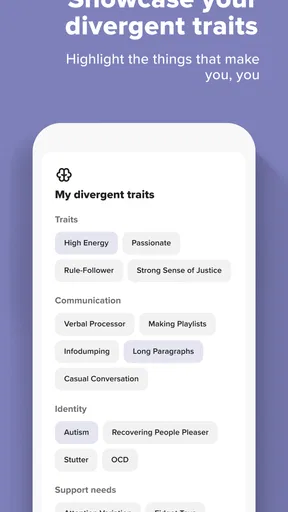
My first tip is to write a profile that explains preferences rather than presenting a medical summary. “I like direct plans and may need time to reply” tells a potential friend something actionable. A long list of traits may be accurate but less helpful. The goal is to make it easier for the right person to start a respectful conversation.
My second tip is to use a stopping rule. If someone repeatedly ignores a stated boundary, turns every subject sexual, demands immediate replies, or makes me feel responsible for their emotions, I would stop engaging rather than trying to repair the conversation indefinitely. A focused community is not a reason to tolerate poor treatment.
My third tip is to separate curiosity from commitment. A match can be interesting without becoming a date, and a date can be pleasant without becoming a relationship. I would avoid making major decisions based on a strong first exchange. Give the connection time to show whether the person is consistent, considerate, and comfortable with ordinary boundaries.
My fourth tip concerns shared homes: decide where private conversations will happen before installing the app. If the only available device is in a public room, I would use it at a time when I can close the screen without interruption, or choose a more private personal device. This is not a special feature of Hiki; it is a practical way to prevent accidental exposure of personal conversations.
Finally, I would review any purchase prompt carefully before confirming it. The app is free to install, but optional in-app items can range from around fifteen dollars to nearly three hundred dollars. That is a wide enough range that I would never tap through a purchase casually, especially on a device linked to a shared payment method. The account holder should understand what is being bought and why before spending anything.
My household verdict
I recommend Hiki to neurodivergent adults who want a more relevant place to meet friends or potential partners and who are comfortable managing their own boundaries. Its focused audience can make introductions feel less alienating than they often do on mainstream dating services. I particularly like the possibility of starting with friendship and of describing communication needs without treating them as an apology.
I would skip it for anyone looking for a completely anonymous browsing experience, a guaranteed local match, or a service that removes the work of judging character. I would also avoid treating it as a family-browsing app. On a shared device, the right approach is one account per person, careful screen privacy, and support that follows consent rather than surveillance.
After using it, my conclusion is that the app’s greatest strength is its clear social purpose, while its central limitation is that purpose cannot solve every problem of online dating. It can help the first conversation begin on more familiar ground. The rest still depends on patience, honesty, safety planning, and the freedom to leave when a connection is not respectful. For the right user, that focused starting point is genuinely worthwhile, and I would recommend giving it a careful try rather than expecting it to do all the social work for you.
Pros
- Designed specifically for autistic
- ADHD
- and neurodivergent singles.
- Profiles can make communication preferences and support needs clearer.
- Community-focused environment may feel more welcoming than mainstream apps.
- Offers opportunities to connect through shared neurodivergent experiences.
- Can help users find friendship as well as romantic relationships.
Cons
- The user base may be smaller outside major cities or specific regions.
- Some features may require a paid subscription or in-app purchases.
- Matching quality depends heavily on having enough active local members.
- Dating safety still requires caution
- verification
- and gradual trust.
- Not every user will understand or respect neurodivergent boundaries.
FAQs for Hiki: Autism ADHD & ND Dating
What is Hiki: Autism ADHD & ND Dating, and who is it designed for?
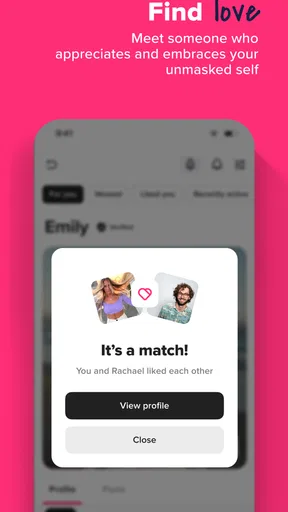
Hiki is a dating and social app created for autistic, ADHD, and other neurodivergent adults. After exploring its profile and discovery features, it feels more focused on shared understanding and comfortable communication than conventional dating platforms. Users can look for romantic relationships, friendships, or community connections. The app is intended for adults, so age requirements and eligibility should be checked before creating an account.
How does matching and communication work on Hiki?
Hiki lets members create profiles describing their interests, personality, identity, and the type of connection they want. You can browse other profiles and interact when someone seems compatible, depending on the app’s current matching and messaging rules. The experience is generally designed to reduce pressure and encourage authentic conversation. However, the quality of matches depends on your location, profile details, activity level, and how many nearby members use the service.
Is Hiki free to download and use?
Hiki can generally be downloaded without an upfront charge, but some features may depend on optional subscriptions, purchases, or limits applied to free accounts. Pricing and included benefits can change, so review the current information shown in the Google Play Store, App Store, or inside the application before paying. You should also check renewal terms, cancellation instructions, and whether a trial automatically changes into a paid subscription.
What privacy and safety features should users consider before joining?
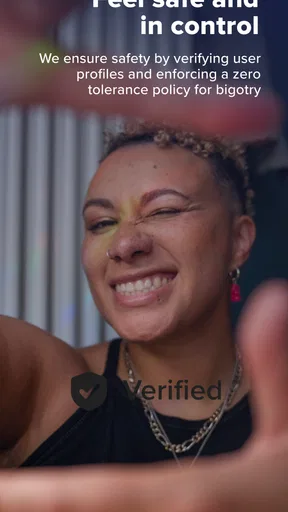
As with any dating app, avoid sharing your home address, financial information, passwords, or highly sensitive personal details with someone you have just met. Review Hiki’s privacy policy and permission requests during setup, and use available blocking or reporting tools if a conversation becomes uncomfortable. Be cautious about links, requests for money, and users who pressure you to move quickly to another platform or meet privately.
Is Hiki suitable for everyone looking for a dating app?
Hiki may be especially useful for people who want to meet others within the neurodivergent community, but it may not provide the same number of users or broad dating pool as larger mainstream services. Your experience can vary considerably by country, city, age range, and preferred connection type. It is also important to communicate your boundaries clearly and remember that shared neurodivergence does not automatically mean compatibility or trustworthy behavior.


